Leadership holds only as far as your reserves do.
A day with the film From Business to Being – and a practice that restores what gets lost under the effort of functioning. For boards, executive teams and leadership groups.
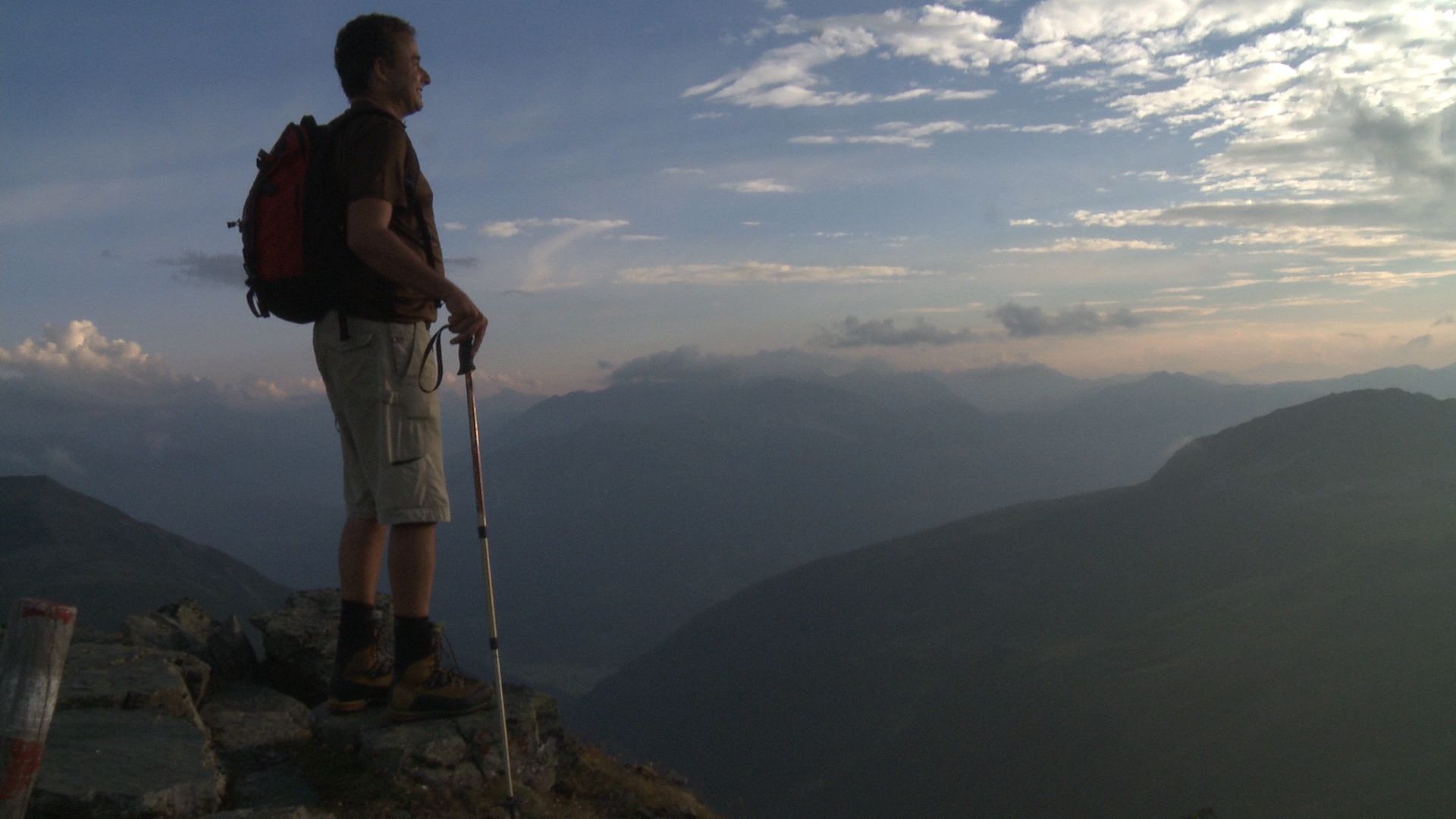
Once a suspicion. Now the reality.
Your leadership team works. It decides, it delivers, it holds together.
And yet something is shifting. Decisions take longer than they used to. Conflicts are no longer worked through, they're managed. In meetings everyone agrees, and afterwards things carry on as before. The good people leave first, and nobody can quite say why.
- 70 % of leaders in Germany report substantially greater strain than a few years ago. (Hernstein Management Report 2024/2025)
- 25 % of leaders worldwide are burnt out or close to it. (Gallup State of the Global Workplace 2024)
For years, everything was fine.
Rudolf Wötzel was an investment banker at Lehman Brothers. He resigned before the bank collapsed.
What he describes here is the end. Not the beginning.
The beginning came years earlier and looked like an ordinary working life. He performed well, he delivered, he was promoted. Nobody around him would have noticed a thing, and he least of all.
That is precisely where the leadership problem sits. Not in the state you can see at the end, but in the years before it, when everything still looks fine.
Alongside Wötzel, the film features Pier Carlo Padoan, Jon Kabat-Zinn, Otto Scharmer, Götz Werner and Tania Singer. It was released in cinemas and reviewed in Süddeutsche Zeitung, Tagesspiegel, Bayern 2 and Hamburger Morgenpost.
Why impulses rarely survive.
A good speaker moves a room. Two weeks later nobody mentions it. A leadership programme delivers models that never surface in the working day. An offsite produces findings that end up in a folder.
That isn't a question of quality. New tools are of little use when the strength to apply them is missing.
Why now.
The years ahead will ask something different of people who carry responsibility. AI is changing what people need to be able to do. The crises no longer arrive one at a time. Geopolitics has become a management reality.
More pressure outside calls for more reserves inside.
What AI cannot do becomes more valuable: judgement, presence, clarity under strain, relationship.
The question is whether the system your people lead from will carry them through the next phase.
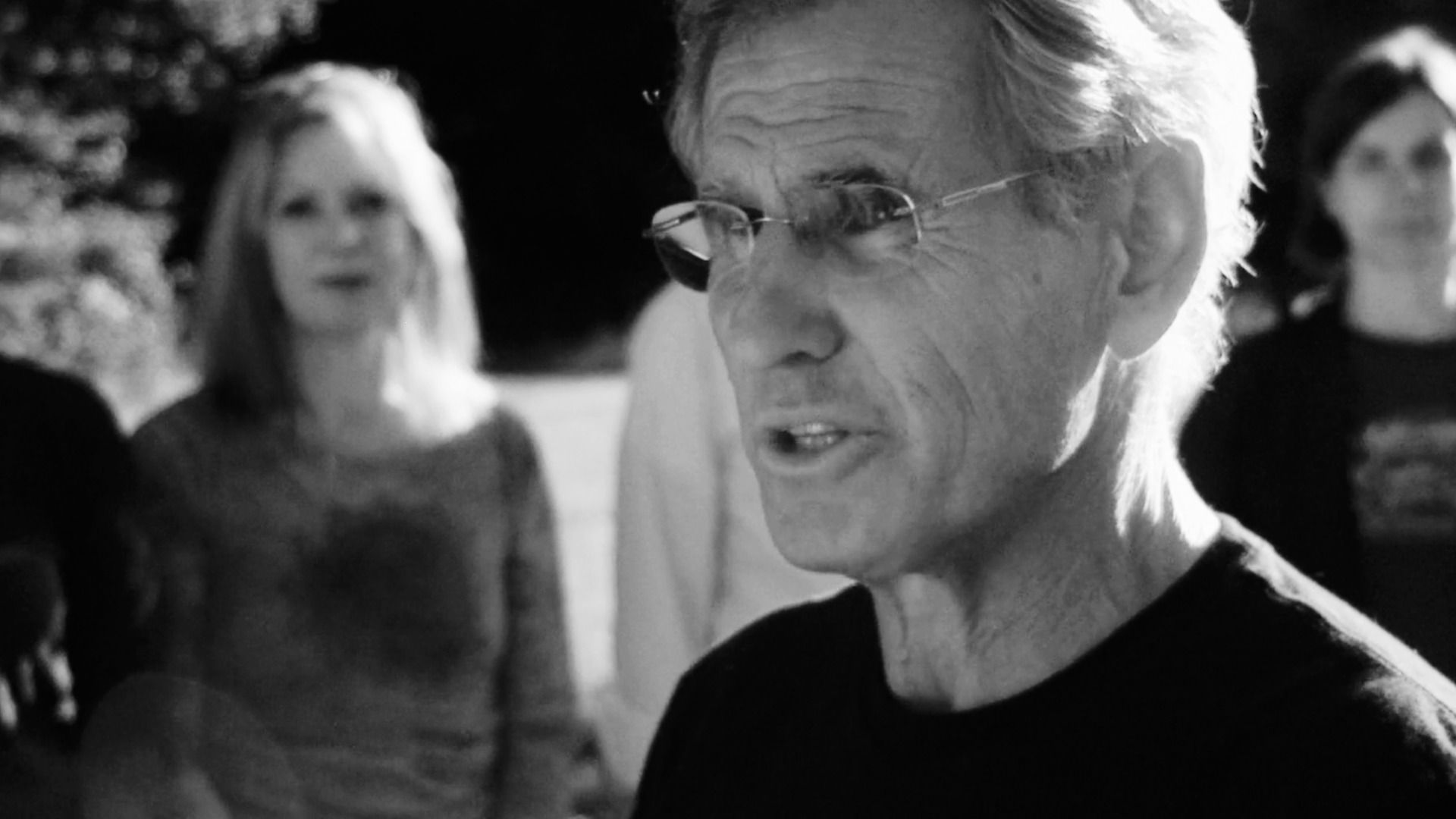
„Wir lenken uns ständig selbst ab. Im digitalen Zeitalter sind unsere Technologien so verführerisch, dass wir nicht mehr wissen, wie wir aufhören sollen. Vielleicht müssten wir uns eines Tages selbst auf unseren Telefonen anrufen und fragen: Bist du überhaupt da? Weißt du, dass du atmest? Fühlst du deinen Körper? Weißt du, wo du gerade stehst oder sitzt?"
Knowledge is rarely what's missing.
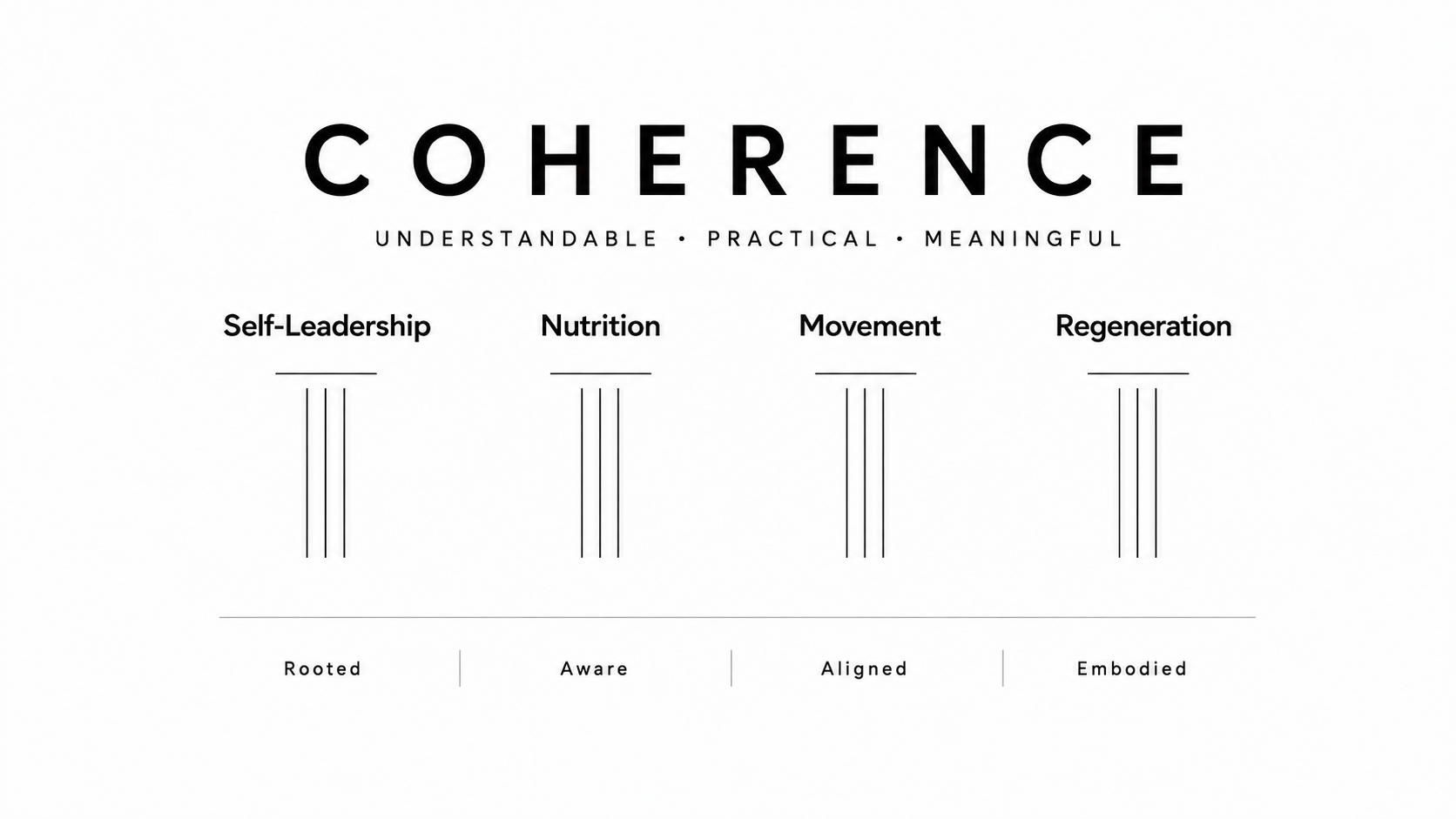
What comes out of this day isn't another method but an architecture – a structure that gives shape to things that otherwise sit side by side.
The roof: coherence.
- Comprehensibility – what happens can be made sense of.
- Manageability – there is something I can do.
- Meaningfulness – it's worth my doing it.
The most important of the three is meaningfulness. It carries the other two.
Four pillars, each load‑bearing:
- Self-leadership – awareness, presence, the space between stimulus and response.
- Nutrition – what sustains the body, and what depletes it.
- Movement – opening through yoga and stretching, demanding through strength.
- Recovery – sleep, the nervous system, the environment you live in.
The arc running through all four: locate → understand → align → embody. Locating and understanding come first. Otherwise the aligning doesn't hold.
Aliveness doesn't come from effort. It comes when the conditions are right for a person to unfold.
The day.
Around five hours, with a clear dramatic structure.
- Opening – ten minutes in which the situation is named.
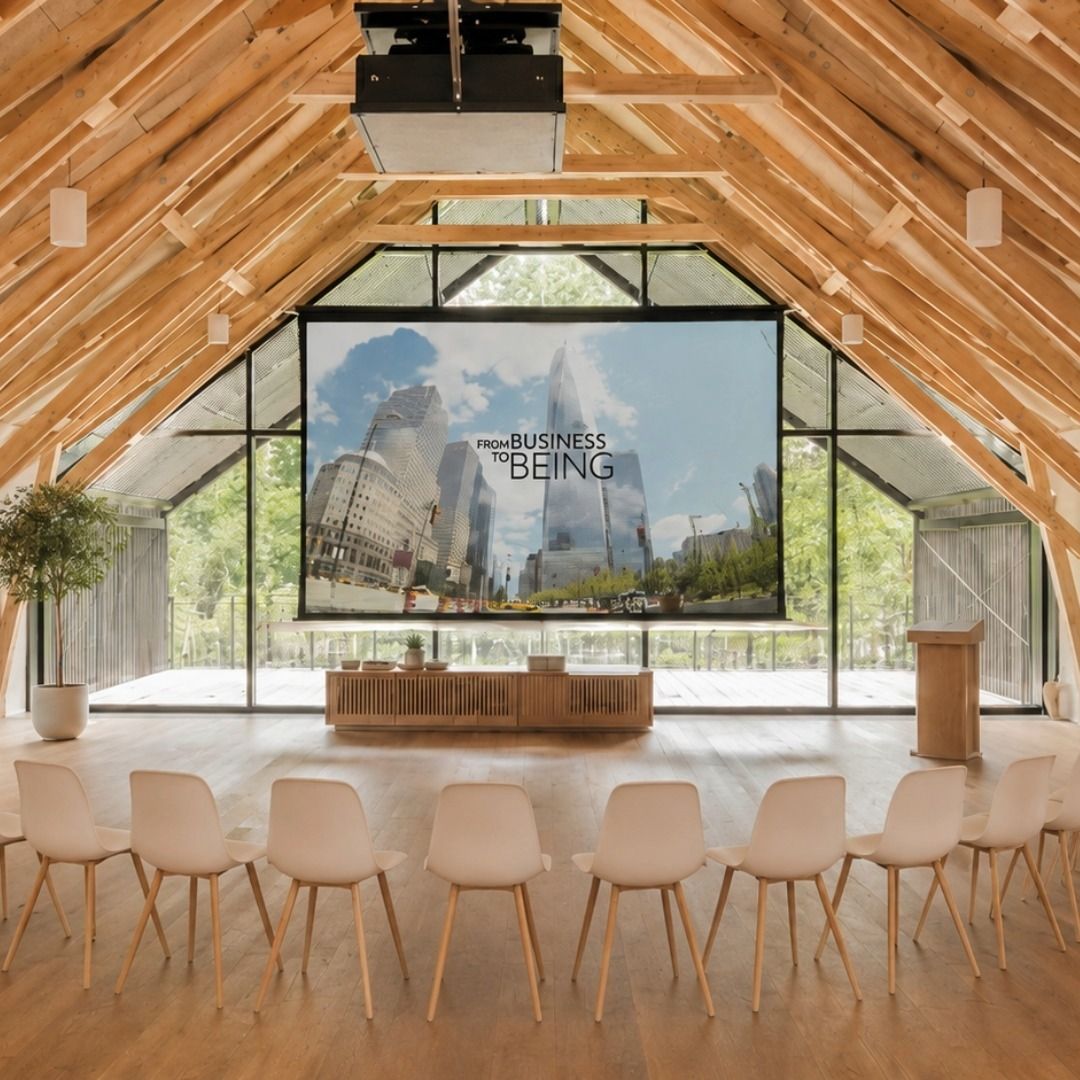
- The film – 89 minutes, without interruption.
- The conversation – 75 minutes of facilitated response. Nobody has to speak.
- The break – real space, so that it can settle.
- The architecture – roof, four pillars, arc.
- The practice – sitting upright, then a breathing practice that sharpens noticing, before the reaction sets in.
- The distillation – three questions, written down, in your own hand. One concrete first step.
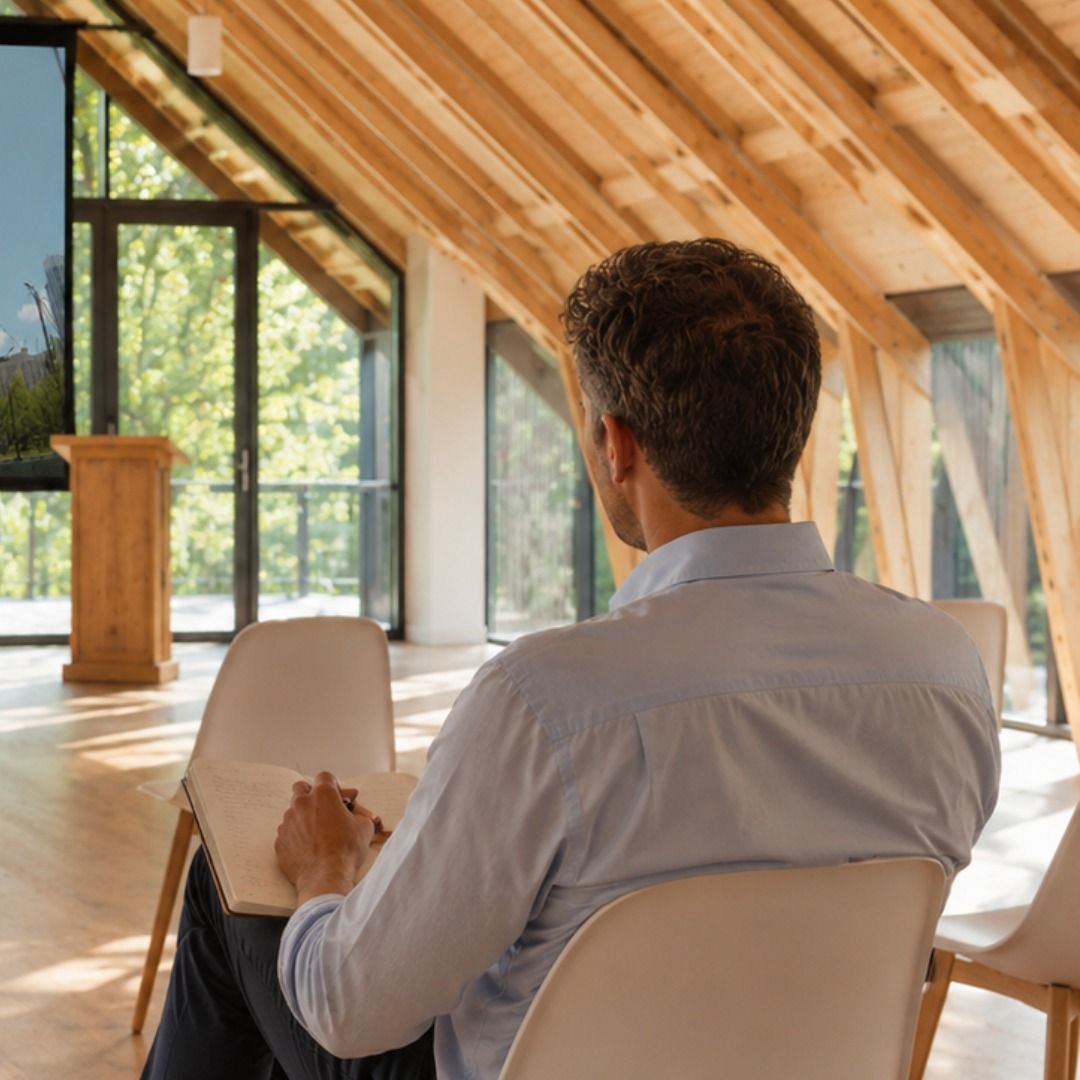
What's still there on Monday.
- A reading of where you stand. Where each person is leading from, and on what. In their own hand, in black and white.
- A map. Four pillars and a roof. You know where to look when something stops holding.
- A breathing practice. Short enough that it survives a full day.
- A shared language. For what everyone has been sensing and had no words for.
- Usable within the leadership team afterwards.
What the day doesn't promise is numbers. It makes visible a foundation that holds under load.
For boards and executive teams · 6 to 12 people
Managing directors, board members, ownership circles, supervisory boards. A small group, discretion built in, setting and materials appropriate to the people in the room. Recommended as an offsite; a working day is possible. German or English.
For groups who want to lead from depth in the next phase – and who need a room where even the board has nothing to prove.
For leadership groups · 15 to 25 people
For teams facing something together – as an anchor within a strategy offsite, at the start of a year, or inside a leadership programme looking for something with substance. In-house or off-site.
Three formats: Prepared – the film privately two or three days beforehand, then a three-hour lab on the morning of the day itself. Offsite – the film together in the evening, the practice the following morning. Working day – everything in one day, around five hours.
Who leads the day.
Julian Wildgruber is a filmmaker and spent fifteen years running his own company. For his feature documentary From Business to Being he worked for four years with Jon Kabat-Zinn, Otto Scharmer, Tania Singer and Götz Werner.
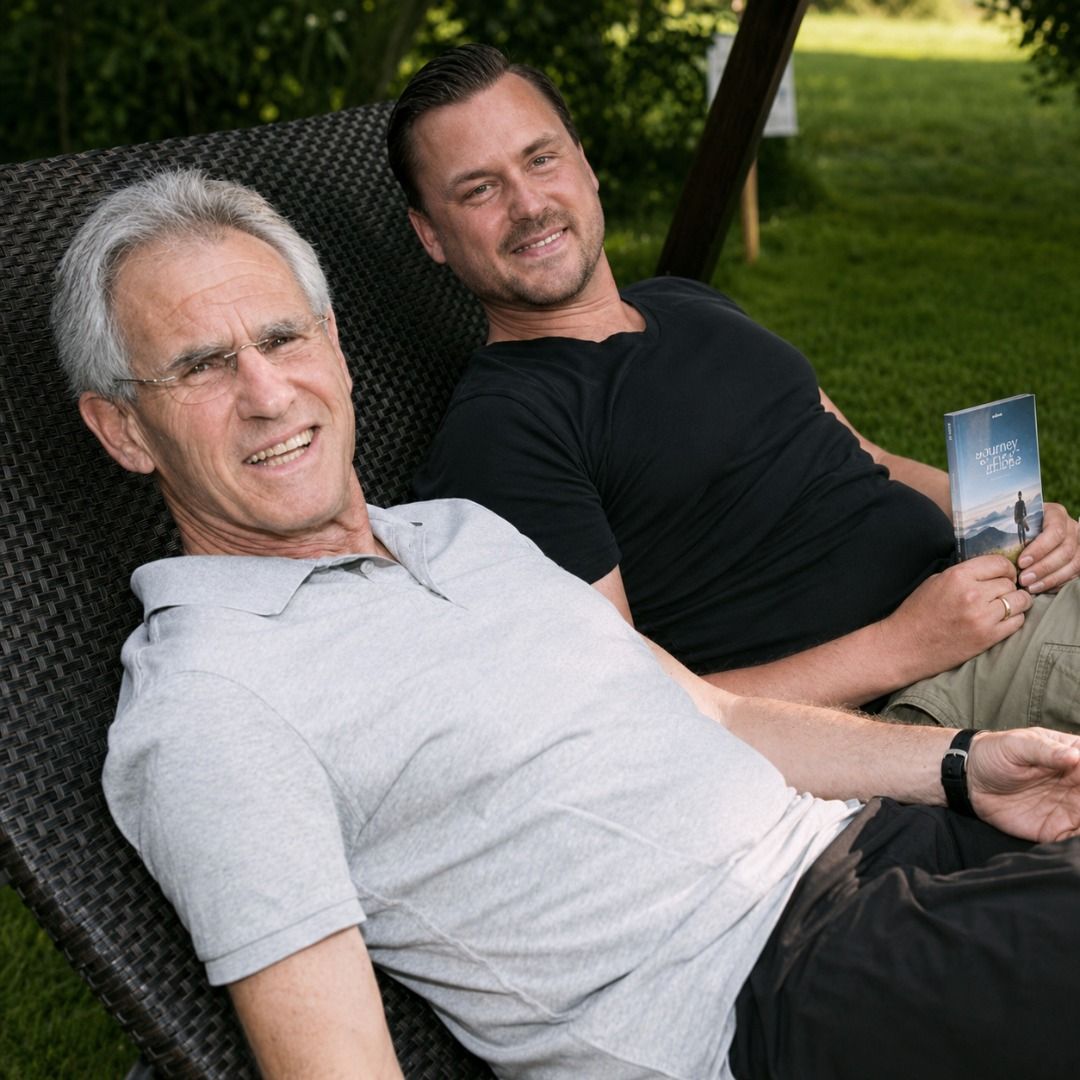
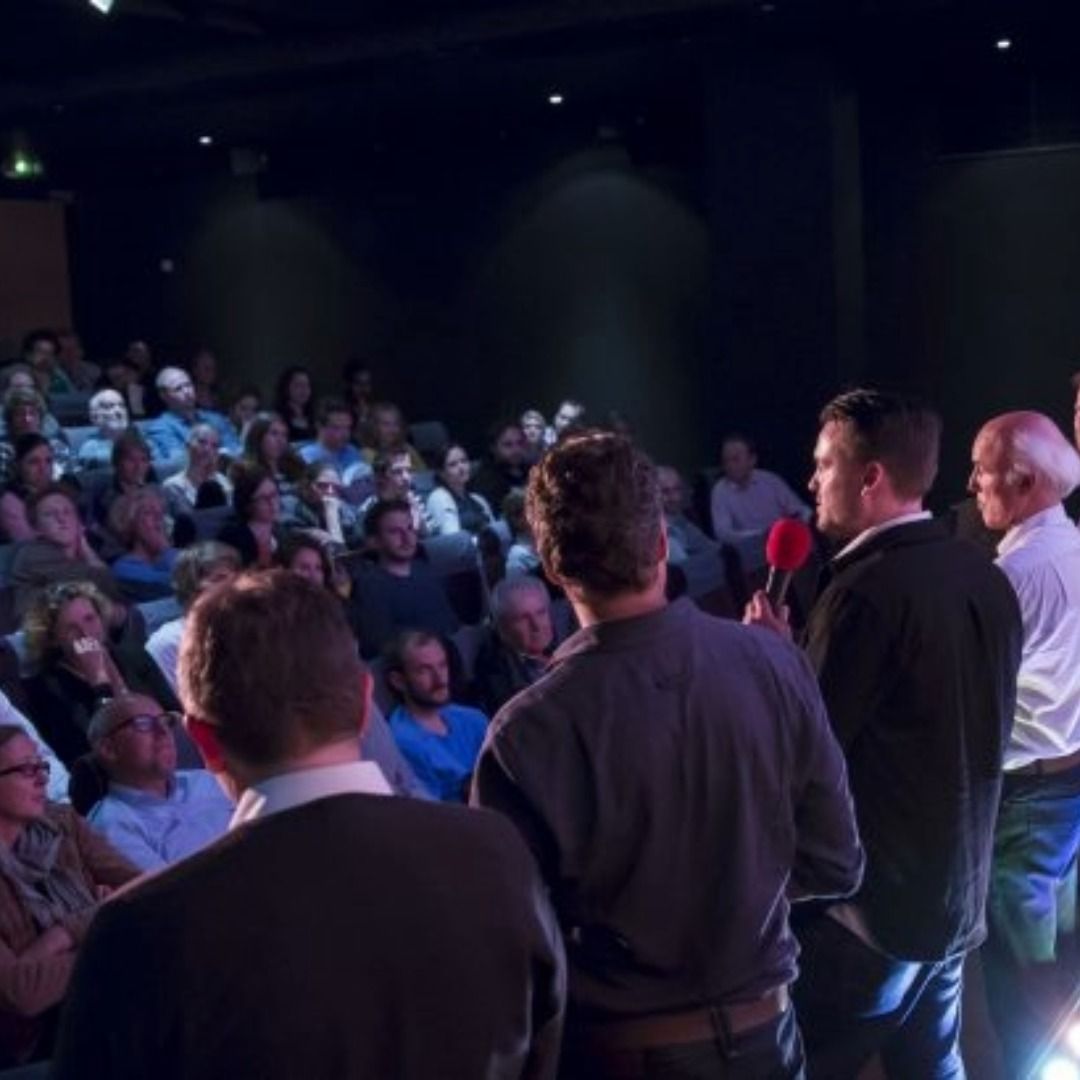
Since then he has brought that work into leadership circles – at Otto Group, Novartis, Bosch, Siemens and dm among others. What he passes on during the day he tested on himself first, over years.
A short conversation, before anything begins.
Thirty to forty-five minutes. You describe what your leadership team is currently carrying. Together we work out which form would fit.
If it fits, you'll get a proposal. If it doesn't, I'll say so – a day that doesn't match the situation is no use to anyone.


